
Find a course
Latest News
-
Lancaster plays host to robotics and autonomous systems conference
Leading players in the robotics and autonomous systems industries have visited a special conference highlighting the latest robotic technology.
-
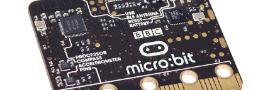
Lancaster University helps BBC get kids coding
Computer scientists at Lancaster University have developed the ‘lightweight operating system’ for the new BBC micro:bit that is being given to almost a million school children this week.
-

Research helping make social media posts more private
Computer scientists at Lancaster University are working on smarter ‘privacy setting’ algorithms to prevent embarrassing photos being shared on social media.
-

Investing in the next generation of researchers
Lancaster University is to receive £1.7m in funding to support the next generation of researchers.
-
Materials Science conference to highlight business opportunities
Business leaders are invited to discover how new materials are changing the world and providing scientific and commercial opportunities.
-

Revolutionary eye-tracking technology for smart watches
Future smart watches could go hands-free thanks to eye-tracking technology that is literally revolutionary.
-

Researchers study Twitter and Reddit to chart the rise of new words
Software developed at Lancaster shows that many popular new words have passed through social media sites long before going mainstream.
-

New Internet of Things research hub announced
New research will ensure that the UK is a global leader in the privacy, ethics, trust, reliability, acceptability, and security (PETRAS) of the 'Internet of Things' (IoT). And with this strong foundation the UK will become the world’s best place to develop and deploy new internet technologies.
-

WiFi signals can be exploited to detect attackers
Physical attacks on devices connected to the Internet can be detected by analysing WiFi signals, computer scientists have discovered.
-

Moving to the next generation in wireless technology
A Lancaster University professor is at the forefront of promising technology techniques to speed up the development of fifth generation (5G) wireless communications.
